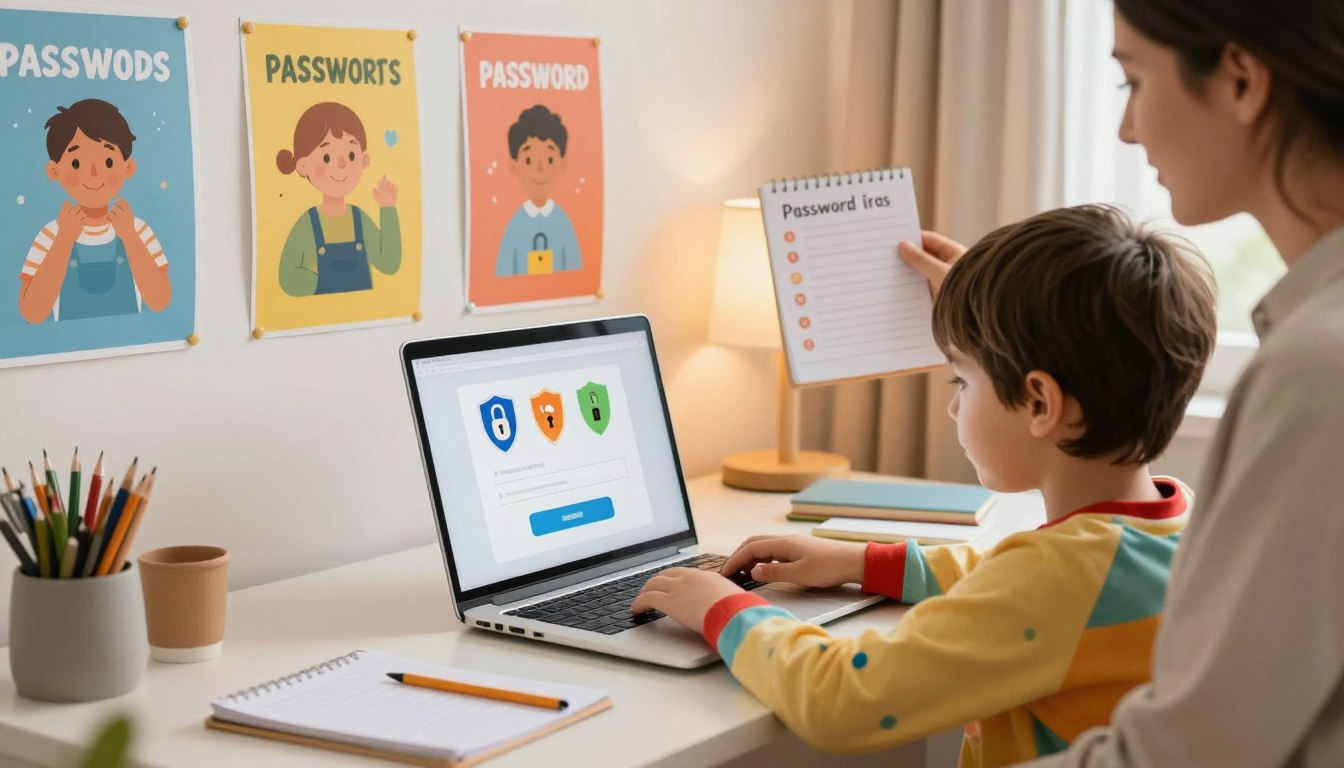
Picture this: Your child is sitting at the kitchen table, eagerly logging into their favorite Roblox world or loading up their school portal. With one quick tap, they enter a massive digital universe. It is an exciting place to learn and play, but as a parent, you know that safety matters most.
Today’s kids are growing up with screens, apps, and online accounts. From math games to Minecraft, every single digital doorway they walk through needs a solid lock to keep their personal information safe from unwanted visitors.
The problem? If you tell an 8-year-old to create a password using “at least 12 characters, an uppercase letter, a number, and a symbol,” their eyes will glaze over. They will likely end up using something like “Password123” or their pet’s name—which hackers can guess in seconds.
Teaching strong passwords for kids doesn’t have to be a frustrating battle. By using a few simple, kid-friendly tricks, you can teach them to create “secret agent codes” that are incredibly strong but super easy for them to remember!
🛡️ Why Password Security Matters for Kids
It is easy to think, “Who cares if my kid’s gaming account gets hacked? There’s no credit card attached.” But the reality of a child’s digital footprint is much more complex.
Hackers aren’t just looking for money. They look for weak passwords to steal accounts, pretend to be your child, cyberbully their friends, or gather small pieces of personal information (like their age and school name) to use later.
Furthermore, kids often suffer real emotional distress when their hard-earned game progress, virtual pets, or digital creations are stolen or deleted by a hacker. Teaching kids about password security early helps them develop healthy digital habits that will protect their future bank accounts and professional emails down the road.
💪 What Actually Makes a Password Strong?
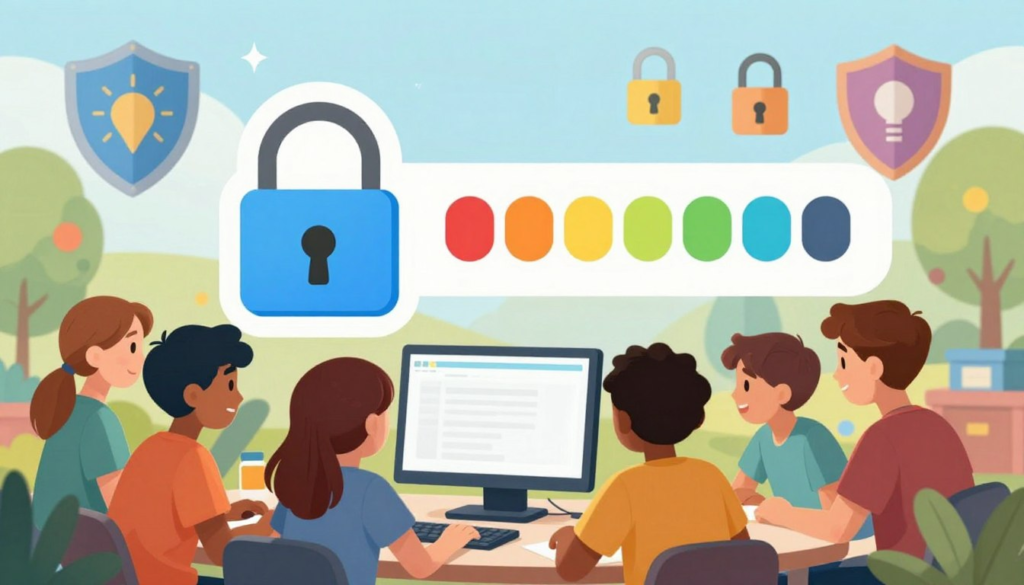
When discussing password strength for young users, parents often focus on making passwords as complicated as possible. But here is a secret that cybersecurity experts know: Length beats complexity!
| The Password Strategy | How Long It Takes a Computer to Hack | Kid-Friendly Rating |
|---|---|---|
| Short & Complex (e.g., j%8K2!) | About 5 seconds. | Terrible. Kids will forget this immediately. |
| Long & Simple (e.g., BlueDogRunningFast) | Millions of years! | Excellent. It is just a silly story in their head. |
A computer program can guess short passwords instantly, even if they have special characters. But a long password—even if it is just regular words strung together—is mathematically incredibly difficult for a computer to crack.
🧠 The “Secret Sentence” Method (Best for Kids!)
The absolute best way to help children create secure passwords is the “Secret Sentence” or “Passphrase” method. It turns security into a fun game.
Step 1: Think of a Silly Sentence
Have your child think of a funny sentence that only they would know. It shouldn’t contain personal info (like their real name or birth year), but rather something random they love.
- Example: “I love eating purple pancakes.”
Step 2: Squish it Together
Take that sentence, remove the spaces, and capitalize the first letter of each word to make it easy to read.
- Result: ILoveEatingPurplePancakes
Step 3: Add a Number and a Symbol
To make it perfectly secure, have them add their favorite number and a symbol at the very end.
- Final Password: ILoveEatingPurplePancakes99!
This password is 28 characters long. It would take a hacker’s supercomputer billions of years to guess it, but your 8-year-old will remember it perfectly because it’s just a funny sentence!
❌ Common Password Mistakes Kids Make
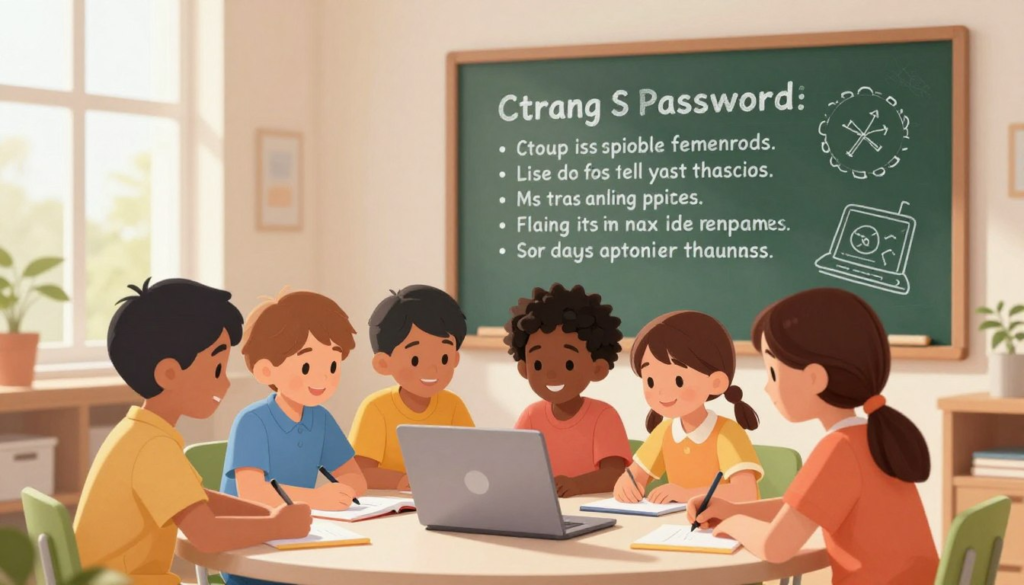
Even with the best intentions, kids (and adults!) fall into bad habits. Make sure your child avoids these common traps:
Using Easily Guessed Info
Kids love to use their pet’s name, their best friend’s name, or their birth year. Explain to them that if someone can find out the answer by looking at their social media or asking them on the playground, it is not a safe password.
Sharing Passwords with Friends
In the digital age, kids often “trade” passwords with their best friends as a sign of trust. You must explain that a password is like the key to your house. You don’t give the key to your house to your friends, because if they lose it, anyone can walk in!
Re-using the Same Password
If your child uses “PurplePancakes99!” for their school email, Roblox, and Minecraft, they are in danger. If a hacker breaches just one of those sites, they now have the key to unlock every single thing your child does online.
🔐 Teaching Your Kids to Remember Passwords Safely
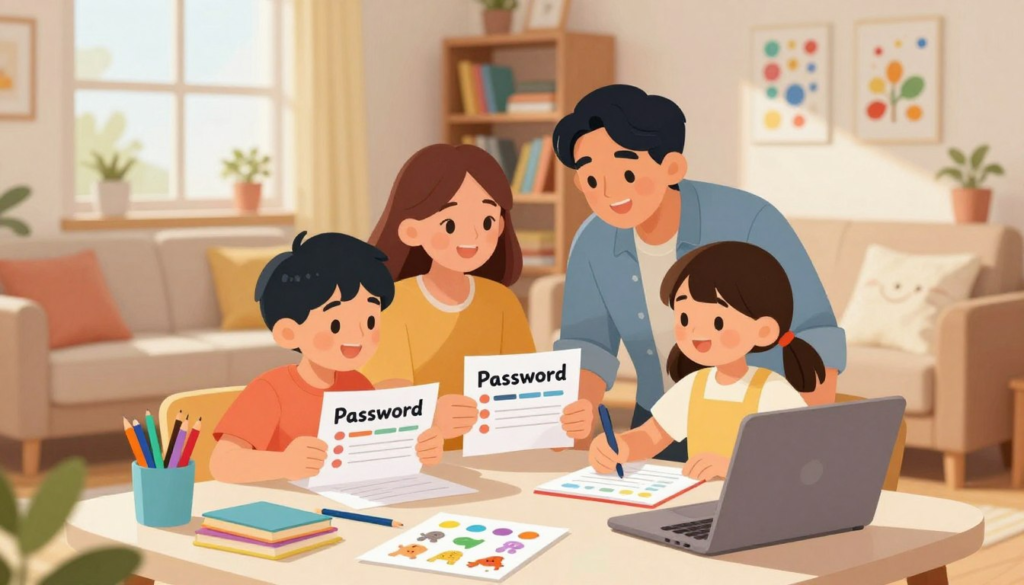
If your child has different passwords for school, games, and email, how are they supposed to remember them all? You don’t want them writing passwords on a sticky note attached to their monitor!
The “Base Password” Trick
If your child isn’t ready for a password manager app, teach them to use a “Base Password” with a site-specific twist.
Let’s say their Base Password is PurplePancakes99!
When they log into Netflix, they add an “N” to the front: N-PurplePancakes99!
When they log into Roblox, they add an “R” to the front: R-PurplePancakes99!
This ensures they have a unique password for every site, but only have to remember one silly phrase.
Introduce a Family Password Manager
As your child gets older (around middle school), it is highly recommended to introduce them to a Password Manager. This is a digital vault that remembers all their passwords for them.
| Password Manager | Why it is great for families |
|---|---|
| 1Password Families | Allows parents to share specific passwords (like Netflix) with kids, while keeping adult bank passwords private. |
| Bitwarden | Incredibly user-friendly interface that auto-fills passwords for kids so they don’t get frustrated. |
| Apple iCloud Keychain | Free and built directly into iPhones and iPads, making it seamless for Apple families. |
🎉 Conclusion
Teaching kids about strong passwords doesn’t have to be a boring tech lecture. By turning it into a fun game of “Secret Sentences,” you empower your child to take charge of their own digital safety.
Sit down with your child tonight and challenge them to come up with the longest, silliest password they can think of. Write down a few options, pick the best one, and start securing their accounts together. You are setting them up for a lifetime of safe internet habits!
❓ Frequently Asked Questions (FAQ)
What is the most effective way of teaching kids password security?
The best way is to use relatable analogies. Explain that a password is exactly like the front door key to your house. You wouldn’t give a copy of your house key to a stranger, and you shouldn’t give your digital key away either!
Why is password strength so important for gaming accounts?
Gaming platforms like Roblox and Minecraft are huge targets for hackers. If a kid uses a weak password, a hacker can easily log in, steal the digital currency (Robux/Minecoins) you paid real money for, and delete hours of hard-earned game progress.
Are there any kid-friendly password tips for young children who can’t type well?
For young kids (ages 5-7), avoid special symbols because they are too hard to find on the keyboard. Instead, have them use three easy-to-spell words pushed together, like “CatTreeJump.” It is long enough to be secure but easy for small fingers to type.
What should I do if my child accidentally shares their password with a friend?
Don’t panic or get angry! Use it as a teaching moment. Sit down with them immediately, help them change the password to a new “Secret Sentence,” and gently remind them that true friends will never ask for their passwords.
Is it okay to let the web browser save my child’s passwords?
If it is a shared family computer in the living room, it is generally safe to use Google Chrome or Safari to save their passwords. However, if they use a school-issued laptop or a public computer, you must teach them to NEVER click “Save Password.”